
 Image 1 of 2
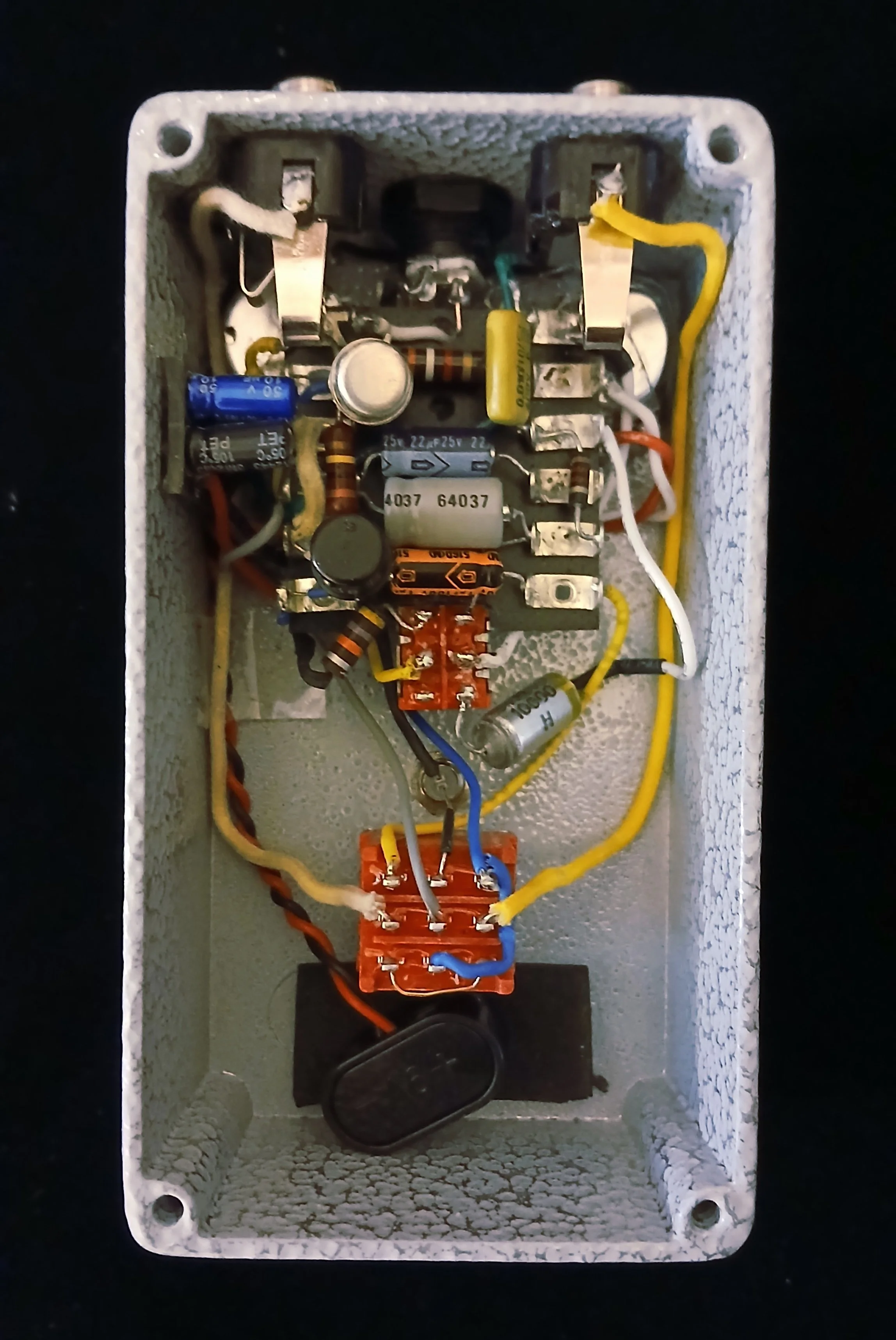 Image 2 of 2
Our “Fuzz 292” Silicon Fuzz has been popular for years, but I needed to find just the right sauce to make a germanium FF-style fuzz not feel like “just another face” in the crowd. I think I nailed it.
Building this classic in point-to-point with some of the best transistors for a ‘Face was a the perfect start. This circuit is so incredibly dynamic, and the extra capacitance of PCB builds can take away from that incredible “volume knob clean up”.
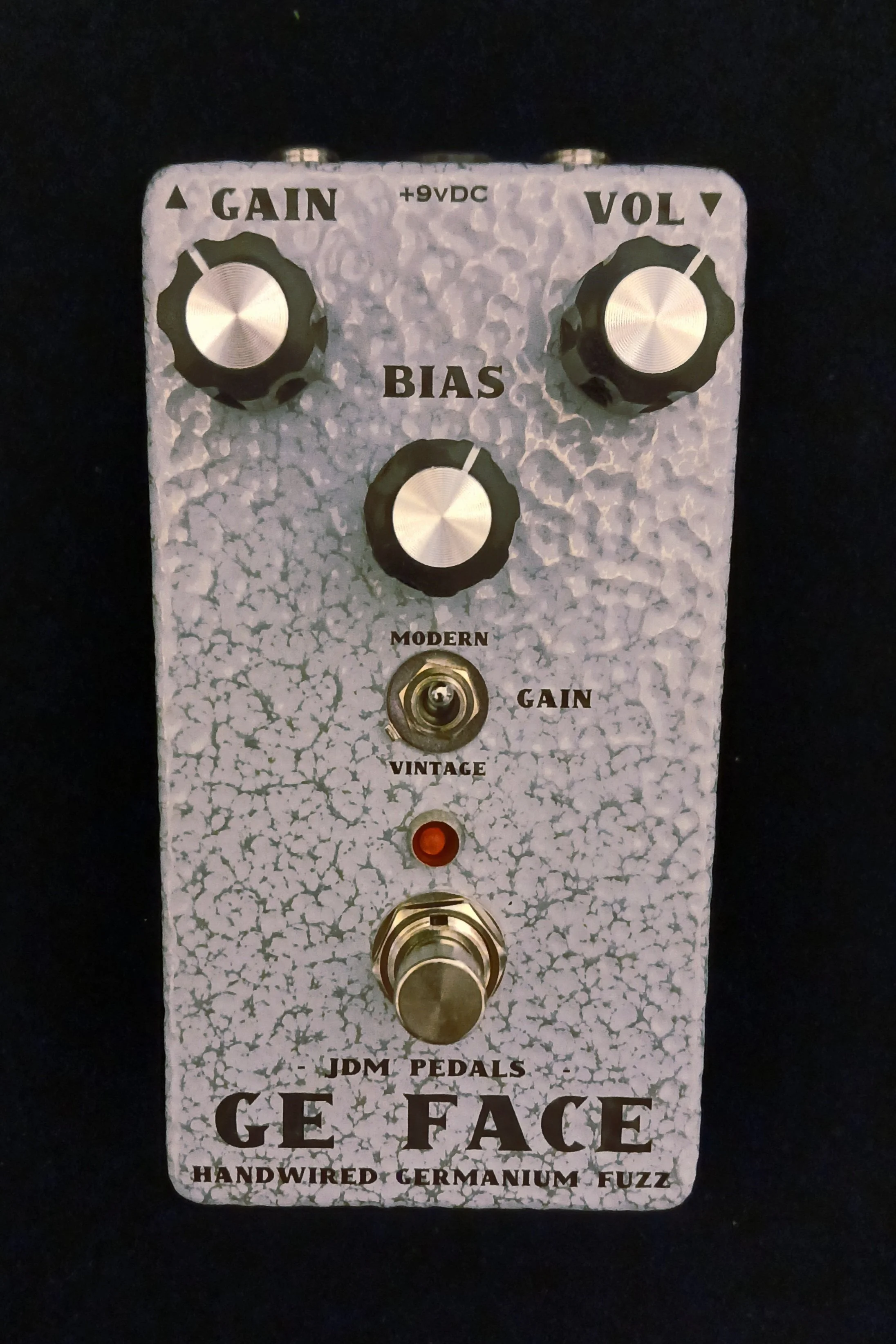
A bias control lets you “pinch down” on the fuzziness, or open it up as you like, and naturally adjusting for temperature changes is also a snap. A well tuned bias control is a key tonal paintbrush.
But.. ONE MORE feature! I tested a variety of switching to control key components in the gain and low frequency content. The classic fuzzface can have a very full, “bloomy” low end, which is lucious in some cases, not so much in some full band situations. So I settled on a “vintage” mode, with the slightly milder gain and full low end of original ‘faces, and a “modern” mode with a bump more gain and a modestly trimmed low frequency output. It’s subtle, but firm - enough to push the midrange through the mix just right when you’re in a context where a ‘Face sometimes just gets swallowed in the mix. I am happy to tune this to your taste. Just let me know - always glad to customize these babies.
-joe
Our “Fuzz 292” Silicon Fuzz has been popular for years, but I needed to find just the right sauce to make a germanium FF-style fuzz not feel like “just another face” in the crowd. I think I nailed it.
Building this classic in point-to-point with some of the best transistors for a ‘Face was a the perfect start. This circuit is so incredibly dynamic, and the extra capacitance of PCB builds can take away from that incredible “volume knob clean up”.
A bias control lets you “pinch down” on the fuzziness, or open it up as you like, and naturally adjusting for temperature changes is also a snap. A well tuned bias control is a key tonal paintbrush.
But.. ONE MORE feature! I tested a variety of switching to control key components in the gain and low frequency content. The classic fuzzface can have a very full, “bloomy” low end, which is lucious in some cases, not so much in some full band situations. So I settled on a “vintage” mode, with the slightly milder gain and full low end of original ‘faces, and a “modern” mode with a bump more gain and a modestly trimmed low frequency output. It’s subtle, but firm - enough to push the midrange through the mix just right when you’re in a context where a ‘Face sometimes just gets swallowed in the mix. I am happy to tune this to your taste. Just let me know - always glad to customize these babies.
-joe